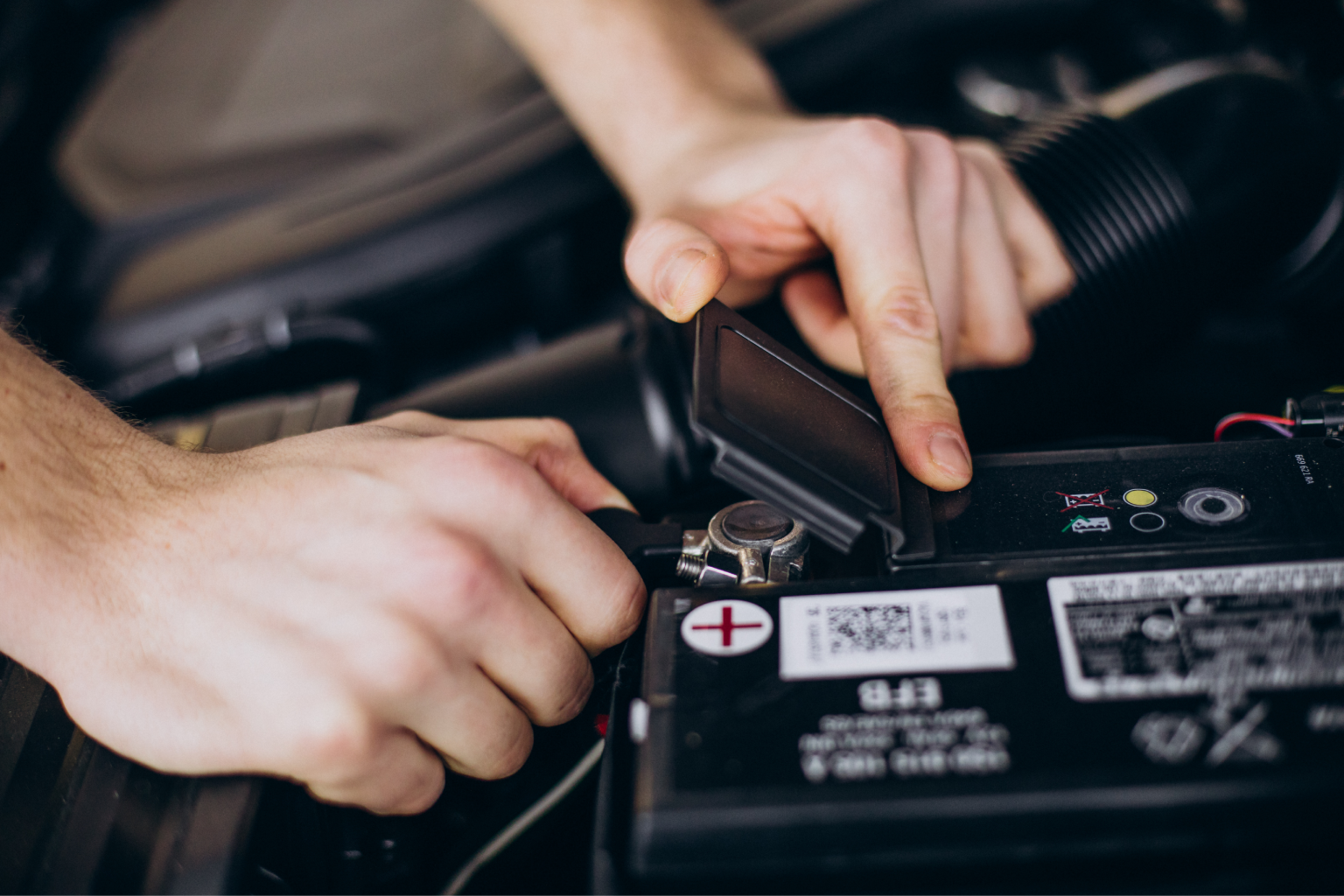
Most car batteries do not fail without giving you some warning first. Slow cranking, dim lights, dashboard warnings and repeated flat batteries can all point to a battery that is struggling to deliver enough power. Recognising these car battery warning signs early gives you a chance to have the battery tested before you are left with a car that will not start.
Not every starting problem means the battery itself has failed, though. A faulty alternator, loose connection or another electrical fault can also leave a battery flat. That is why the right approach is to identify the symptom, test the battery and check the charging system before deciding that you need a replacement.
Here are seven car battery warning signs worth taking seriously.
1. Your Engine Takes Longer to Crank
One of the clearest signs of a bad car battery is a noticeable change when you start the engine. Instead of turning over quickly as usual, the starter may sound slower, hesitant or laboured.
The battery supplies the initial electrical power needed to operate the starter motor. As a battery loses capacity, it may struggle to provide enough current for a strong engine crank, particularly when the battery is already under stress. RACV identifies slow or hesitant cranking as a key warning sign of a failing battery.
Pay attention to a change from your car's normal starting behaviour. If the engine consistently cranks more slowly, have the battery tested rather than waiting until it cannot start the vehicle at all.
2. Your Headlights and Electrical Systems Become Weaker
A weak battery can also show itself through the vehicle's electrical systems. You may notice dimmer headlights, slower windscreen wipers, a silent radio or remote locks that stop responding reliably. RACV lists these among the warning signs drivers should watch for.
These weak car battery symptoms do not automatically prove that the battery is failing. Modern vehicles have complex electrical systems, and charging or wiring faults can create similar symptoms.
If several electrical functions start behaving differently at the same time, a battery and charging-system test can help identify the actual cause.
3. The Battery Warning Light Appears on the Dashboard
A battery-shaped warning light should not be ignored, but it is important to understand what it actually means.
The battery warning light can indicate a problem with the charging system, rather than a faulty battery alone. A failing alternator, damaged battery, loose wiring or a broken drive belt can all contribute to the warning appearing.
Therefore, replacing the battery without diagnosing the cause may not solve the problem. If the warning light stays on while you are driving, have the vehicle checked promptly.
4. You See Corrosion, Swelling or Signs of a Leak
Some car battery problems can be identified without starting the engine. When it is safe to do so, look at the battery for obvious physical damage.
Watch for:
- White, blue or greenish corrosion around the terminals.
- A swollen or distorted battery case.
- Visible fluid leakage.
- Loose or damaged battery connections.
Corrosion around the terminals can interfere with the electrical connection, while swelling or leakage can indicate a damaged battery. RACV specifically identifies corrosion and swelling as warning signs that warrant professional battery testing.
Do not attempt to keep using a visibly damaged battery simply because the car still starts.
5. Your Car Keeps Needing a Jump-Start
One jump-start does not automatically mean you need a new battery. You may have accidentally left the headlights on, used an accessory for too long or left the vehicle parked for an extended period.
The problem is when it keeps happening.
If the battery repeatedly goes flat after being charged or jump-started, it may no longer be holding charge properly. However, the battery is not the only possible cause. Short trips, long periods of inactivity, a faulty alternator, loose connections and other electrical faults can also cause repeated discharge.
So rather than relying on another jump-start, have the battery and charging system tested.
6. Your Battery Is Reaching the End of Its Expected Life
Age alone does not prove that a battery has failed, but it becomes increasingly relevant as the battery gets older.
RACV states that a standard lead-acid battery typically lasts around three to five years, while an AGM battery generally lasts around five to seven years, although actual service life varies with use, climate and maintenance.
Short trips, prolonged periods without use and extreme temperatures can put additional stress on a battery.
If your battery is approaching the end of its typical service life and you are also noticing slow starts or other symptoms, testing it before it fails completely is a sensible step.
7. Your Battery Keeps Going Flat Without an Obvious Reason
A battery that repeatedly loses charge needs investigation.
Leaving lights or accessories running can drain a battery, but repeated flat batteries can also result from short trips, infrequent driving, extreme temperatures, charging-system faults, loose cables or other electrical problems.
This is why how to know if your car battery is dying cannot be answered by looking at one symptom alone. A battery can be discharged without being defective, while a deteriorated battery may appear to work normally until it is placed under starting load.
A proper battery test can determine whether the battery is healthy, needs charging or is approaching the end of its serviceable life.
How to Know If Your Car Battery Is Actually Failing
The warning signs can tell you that something needs attention, but testing provides a much clearer answer.
For example, slow cranking could result from a weak battery, but a starting or charging-system fault could produce a similar complaint. Likewise, a battery warning light can indicate an alternator or wiring problem rather than a battery that needs replacing.
That is why a proper assessment should consider:
- Battery condition and charge.
- Starting performance.
- Charging-system operation.
- Battery terminals and connections.
- Visible battery damage.
- The vehicle's electrical system where required.
If testing shows that the battery can no longer hold or deliver the required charge, replacement may be necessary. If the battery is healthy but repeatedly goes flat, the underlying electrical or charging problem needs to be addressed instead.
When Do You Need a Car Battery Replacement in Adelaide?
You do not necessarily need car battery replacement in Adelaide simply because the battery has gone flat once. A healthy battery can become discharged for several reasons, and charging it may restore normal operation.
Replacement becomes more likely when testing shows that the battery has deteriorated and can no longer reliably provide the power required to start the vehicle. Repeated jump-starts, persistent slow cranking and an ageing battery can strengthen the case for replacement, particularly when they occur together.
The replacement battery must also be suitable for the vehicle. Modern cars can have specific battery requirements, particularly vehicles equipped with stop-start systems. For example, RACV notes that some newer vehicles require AGM batteries and that certain modern vehicles may require specialist equipment when the battery is replaced.
That makes correct battery selection and installation just as important as recognising the original problem.
What Should You Do When You Notice These Warning Signs?
Do not wait for the battery to fail completely if your car is already showing several symptoms.
If you notice slow cranking, dim lights, repeated flat batteries or a dashboard battery warning, have the battery and charging system checked. That approach can distinguish a worn battery from a problem elsewhere in the electrical system and prevent you from paying for a replacement that does not address the actual fault.
For car battery warning signs that keep returning, professional testing is a more reliable answer than guessing from symptoms alone.
Conclusion
A slow engine crank, weaker electrical systems, dashboard warnings, visible battery damage, repeated jump-starts, an ageing battery and unexplained flat batteries are all reasons to have your battery checked. These car battery warning signs do not all prove that the battery has failed, but they should not be ignored.
At Rowell & Searle Auto, Adelaide drivers can access electrical and battery services, including advanced fault diagnostics and RAA batteries with free battery testing. The family-owned business has served Adelaide since 1945 and operates as an RAA Approved Repairer, with modern diagnostic equipment used to identify the actual cause of vehicle problems.
If your car is showing signs of a weak battery, have it tested before a starting problem leaves you stranded. Contact Rowell & Searle Auto to arrange a battery test or discuss car battery replacement in Adelaide when a new battery is actually required.