Imagine you are merging onto a busy highway. You press the accelerator, the engine revs loudly, but your car barely gains speed. This unsettling disconnect between your engine’s power and your wheels is the classic "slipping" sensation of a failing clutch. According to automotive industry data, clutch-related issues remain one of the top five reasons for manual transmission vehicle breakdowns globally.
In this comprehensive guide, we will explore the critical signs that your vehicle requires clutch repairs & replacements. We will break down the costs, the mechanical symptoms, and why a timely clutch repair service is essential for your safety. Whether you are driving an older hatchback or a modern performance car, understanding your clutch is the key to longevity on the road.
Understanding the Clutch: More Than Just a Pedal
Know before you start looking at symptoms, the purpose of the clutch. The clutch joins the transmission with the crankshaft of the engine. Whenever pressing or releasing a pedal, you are able to change gears and halt the car without stalling.
The friction material that provides the friction of the clutch disc thins out in time, just like brake pads. A treaded disc frees the flywheel gripping force of the pressure plate. This is when the need for clutch repairs & replacements becomes unavoidable.
Top 7 Symptoms of Clutch Failure You Shouldn’t Ignore
If you are searching for a car clutch repair near me, chances are you have noticed something "off" about your drive. Here are the seven most common red flags.
1. The Clutch is Slipping
Slipping is the most prevalent indication of the necessity of repairs. When the friction material wears off, the engine runs at top speed, and the speed of the car slows down. The issue normally occurs during load, such as hill climb driving or towing.
2. Difficulty Shifting Gears
And when you think you are wrestling with the gear stick, it is difficult to shift into first or reverse, and the clutch is not able to fully disengage. This normally represents a connection or hydraulic problem, and not the disc.
3. A Burning Smell (Like Burnt Rubber)
A dry smell in the engine compartment is an indication of overheating clutch. Over-slipping generates friction in the clutch. Should this give smells when you are stuck in traffic, make use of professional clutch repair services until the flywheel is ruined.
4. Spongy, Stiff, or Vibrating Pedal
The "feel" of the pedal tells a story. There are issues with the feel of the pedal.
- Spongy/ Soft - fluor in the hydraulic line or a broken slave cylinder.
- Stiff - problems with the pressure plate or release bearing.
- Vibrating- there can be a warped disc or an uneven flywheel.
5. Unusual Noises (Chirping or Grinding)
The unusual sounds (chirping or grinding) may be due to improper delivery during birth.
A squeak or chirp when pressing the pedal is an indication of the worn-out throw-out (release) bearing. The hard grind means that the material that provides friction is missing, and metal-on-metal contact occurs.
6. "High" Clutch Pedal
Putting on clutches raises the point of engagement. When it requires only a little tap of the pedal to use the clutch, then you are nearly at its end.
7. The Pedal Stays on the Floor
When the pedal becomes stuck to the floor, a hydraulic system is malfunctioning. Make an immediate clutch kit replacement, or repair the hydraulic cylinder.
Clutch Repair vs. Replacement: How to Decide What Your Car Really Needs
A high-quality and well-renowned local clutch specialist will examine whether the process requires a minor repair or a complete overhaul. This depends on the failed component.
When Repair Is Possible
It may not be a problem with the clutch disc. A bad master cylinder or leaking hose can be fixed. This is much cheaper than replacement.
When a Full Replacement is Necessary
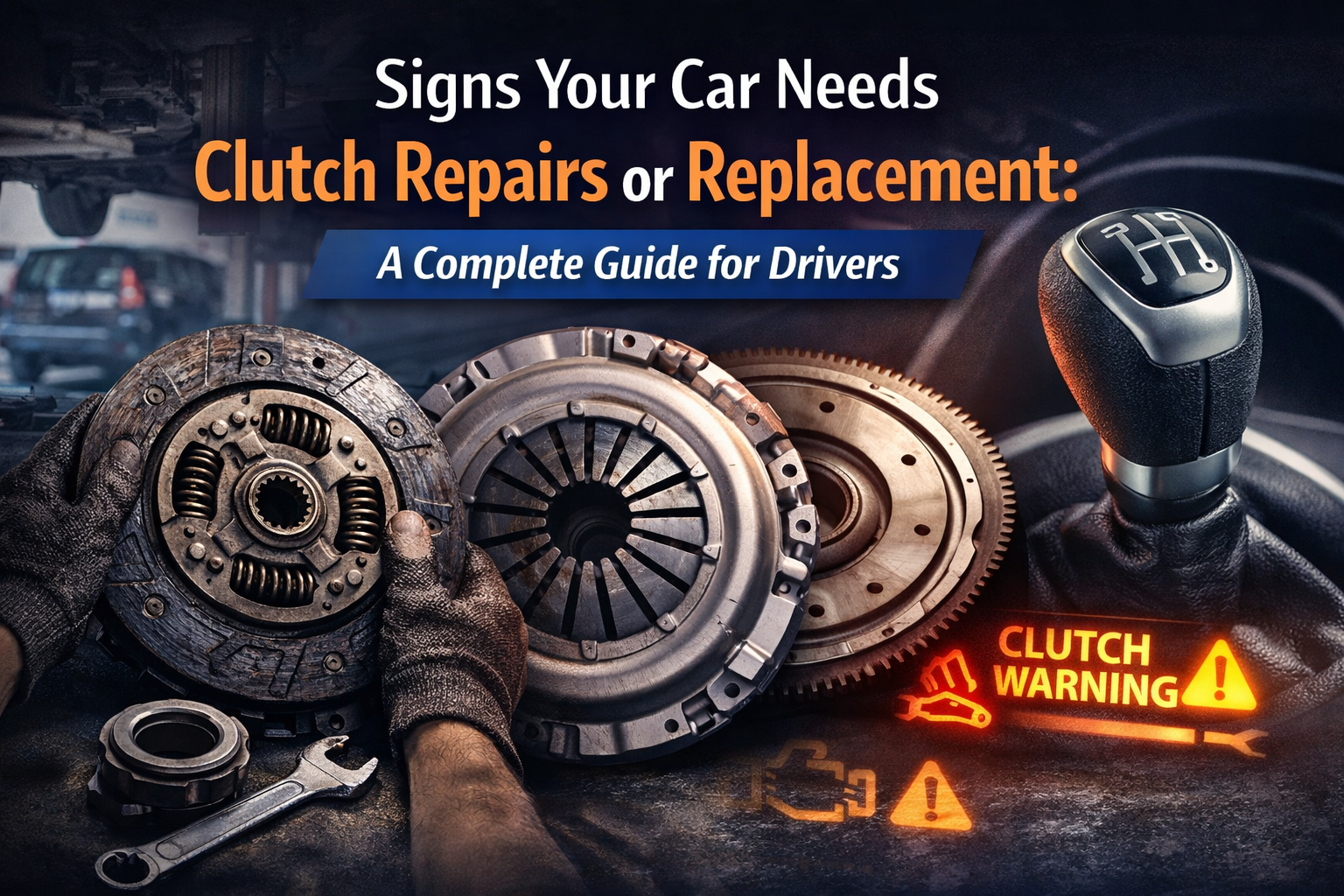
In most cases, if the mechanic has to "drop" the transmission to access the clutch, it is wise to perform a full clutch kit replacement. A standard kit includes:
- The Clutch Disc
- The Pressure Plate
- The Release Bearing
Replacing only one part when the labour cost to open the gearbox is high usually results in poor value for money. Most experts recommend a full replacement once the car exceeds 80,000 miles to ensure long-term reliability.
What Happens If You Ignore Clutch Problems? Risks Explained
Many drivers try to "limp" along with a slipping clutch to save money. However, delaying clutch repairs & replacements can lead to catastrophic expenses.
Damage to the Flywheel
When a clutch slips, it generates immense heat. This heat can "blue" or crack the flywheel. While a clutch disc is relatively inexpensive, a dual-mass flywheel (found in many modern diesel cars) can cost over $440 to $660 to replace.
Transmission Failure
If the clutch does not disengage properly, you are essentially forcing the gears to sync while they are still under engine power. This causes the synchronizers in your gearbox to wear out prematurely. Shifting with a bad clutch will eventually lead to a broken transmission.
Stranded on the Road
Clutch failure is rarely "slow" at the end. One minute, it is slipping; the next, it snaps, and the car will not move at all. This often happens at intersections or in high-speed traffic, posing a major safety risk to you and other drivers.
The Importance of Professional Clutch Repair
While DIY culture is growing, clutch repairs & replacements are tasks best left to the experts. The process involves removing the driveshaft, disconnecting the gearbox, and sometimes supporting the entire engine.
A professional clutch repair ensures:
- Correct Torque: Bolts must be tightened to specific manufacturer specs.
- Flywheel Resurfacing: A pro will check if the flywheel needs grinding to ensure the new clutch bites correctly.
- Hydraulic Bleeding: Ensuring no air bubbles remain in the system to prevent a spongy pedal.
Maintenance Tips to Avoid Early Clutch Wear
To postpone the necessity of clutch repair, the following driving habits should be used:
1. Don’t ride the Clutch - Leave your foot off the pedal. The disc continues to rub the flywheel even at the light pressure, producing heat.
2. Use Neutral at Lights - Shift to neutral and release the pedal at stoplights. This saves the bearing of release.
3. Do not try to balance on the clutch - use the handbrake where there is an incline.
4. Breadth Shifting - adjust the speed of the motor to the gear to minimise the amount of friction on the clutch
Conclusion
Your car's clutch is a hard-working component that naturally wears out. However, being proactive about clutch repairs & replacements is the difference between a scheduled maintenance visit and an expensive midnight tow. By recognising the early signs- slipping, smells, and strange noises- you can address issues before they spiral into transmission failure.
If you suspect your vehicle is struggling, seek out a local clutch specialist for a diagnostic test. A well-maintained clutch doesn't just make your car easier to drive; it ensures your vehicle remains a reliable tool for your daily life.
Is your car showing any of these symptoms? Don't leave it to chance. Contact our team today for a comprehensive clutch health check and expert repair services!
FAQs
How long does a clutch replacement take?
For most standard front-wheel-drive cars, a professional clutch repair or replacement takes between 4 and 8 hours. Larger 4x4 vehicles may take a full day.
How Much Does Clutch Replacement Cost?
The question of how much clutch replacement costs is a common one for Indian drivers. The price varies based on the vehicle segment and the type of flywheel used.
Can I drive with a slipping clutch?
You can, but you shouldn't. Driving with a slipping clutch causes excessive heat that can ruin your flywheel and potentially leave you stranded when the friction material finally gives up.
What is included in a clutch kit?
A standard clutch kit replacement includes the clutch plate (friction disc), the pressure plate, and the release bearing. Some kits also include a pilot bearing or a slave cylinder.
Why does my clutch smell like it's burning?
This happens when the clutch disc is slipping against the flywheel. The friction generates intense heat, burning the organic or semi-metallic facing of the disc.
How can I find a reliable car clutch repair near me?
Look for garages that specialise in transmissions or manual gearboxes. Check for certifications and online reviews that specifically mention clutch or gearbox work, as these require more specialised tools than a standard oil change.