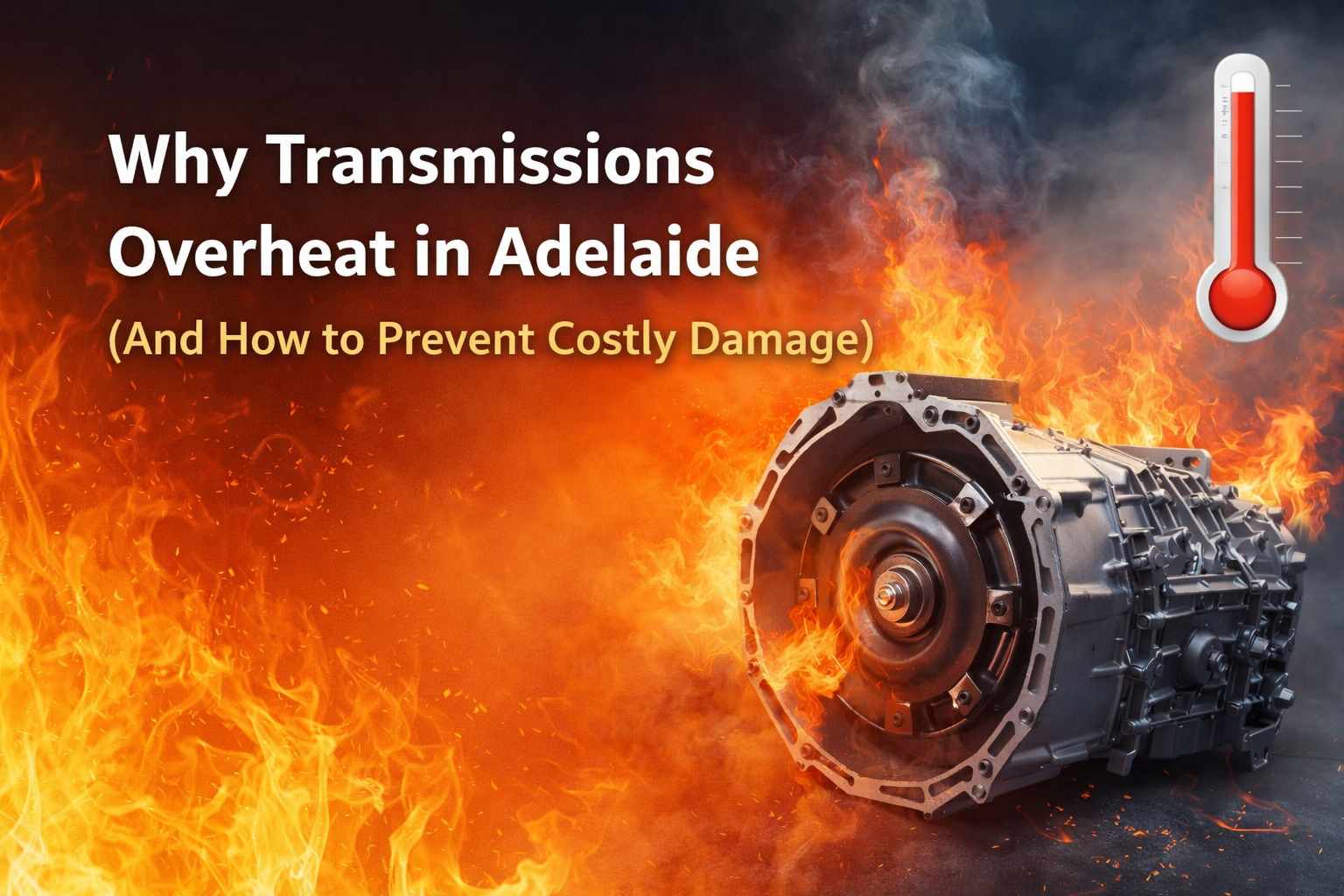
Adelaide drivers experience some of the harshest conditions for automatic transmissions in Australia. Long summers, stop-start CBD traffic, towing caravans across South Australia, and extended highway driving all place heavy stress on modern gearboxes.
Transmission overheating is one of the most common causes of gearbox failure, yet many drivers don’t realise there’s a problem until serious damage has already occurred. Understanding why transmissions overheat — and how to prevent it — can save thousands in repair costs.
Why Transmission Overheating Is Common in Adelaide
1. Stop-Start City Driving
Driving through Adelaide’s CBD and surrounding suburbs means frequent gear changes, low airflow, and higher operating temperatures. Automatic transmissions generate heat every time they shift — and city traffic doesn’t allow enough cooling time.
2. Hot South Australian Summers
Extended periods of high ambient temperatures make it harder for transmission fluid to stay within a safe operating range. Once fluid overheats, it breaks down, loses lubrication properties, and accelerates internal wear.
3. Towing and Heavy Loads
Towing caravans, boats, or trailers — especially through regional South Australia — dramatically increases transmission load. Heat builds quickly when climbing hills or driving long distances under load without additional cooling or monitoring.
4. Ageing or Degraded Transmission Fluid
Old or contaminated transmission fluid cannot dissipate heat effectively. Many vehicles on Adelaide roads are overdue for servicing, which increases the risk of overheating even during normal driving.
Warning Signs Your Transmission Is Overheating
Catching overheating early can prevent major damage. Common warning signs include:
- Delayed or harsh gear changes
- Slipping between gears
- Burning smells
- Dashboard transmission or engine warning lights
- Loss of power when accelerating or towing
If these symptoms are ignored, overheating can lead to clutch failure, valve body damage, or complete transmission failure.
For drivers noticing early warning signs, consulting a transmission specialist in Adelaide can prevent small issues from turning into full rebuilds.
How Overheating Damages Your Transmission
Excessive heat causes:
- Breakdown of transmission fluid
- Premature clutch wear
- Increased internal friction
- Seal hardening and fluid leaks
- Valve body malfunction
Once fluid is damaged by heat, it can no longer protect internal components — meaning damage continues even after the vehicle cools down.
How Adelaide Drivers Can Prevent Transmission Overheating
1. Regular Transmission Servicing
Routine servicing removes degraded fluid and restores cooling efficiency. Vehicles used for city driving, towing, or long trips across South Australia should not follow “lifetime fluid” claims.
2. Install a Transmission Temperature Gauge
A temperature gauge allows drivers to monitor heat levels in real time — especially important for towing and regional driving. Early intervention can prevent breakdowns.
3. Address Cooling System Issues Early
Radiator and cooling system problems directly affect transmission temperatures. Even minor cooling faults can trigger overheating under load.
4. Don’t Ignore Minor Symptoms
Small shift changes or occasional hesitation are often the first signs of heat-related stress.
For vehicles still under warranty or following manufacturer schedules, combining preventative checks with log book servicing in Adelaide helps identify transmission stress early while keeping warranty protection intact.
Adelaide Driving Conditions Demand Proactive Transmission Care
From summer heatwaves to towing holidays and daily city traffic, Adelaide presents unique challenges for automatic transmissions. Preventative maintenance and early diagnosis are the most effective ways to avoid costly repairs and unexpected breakdowns.
If your vehicle is showing signs of overheating — or if you regularly drive in demanding conditions — addressing transmission health early can extend the life of your gearbox and improve reliability.