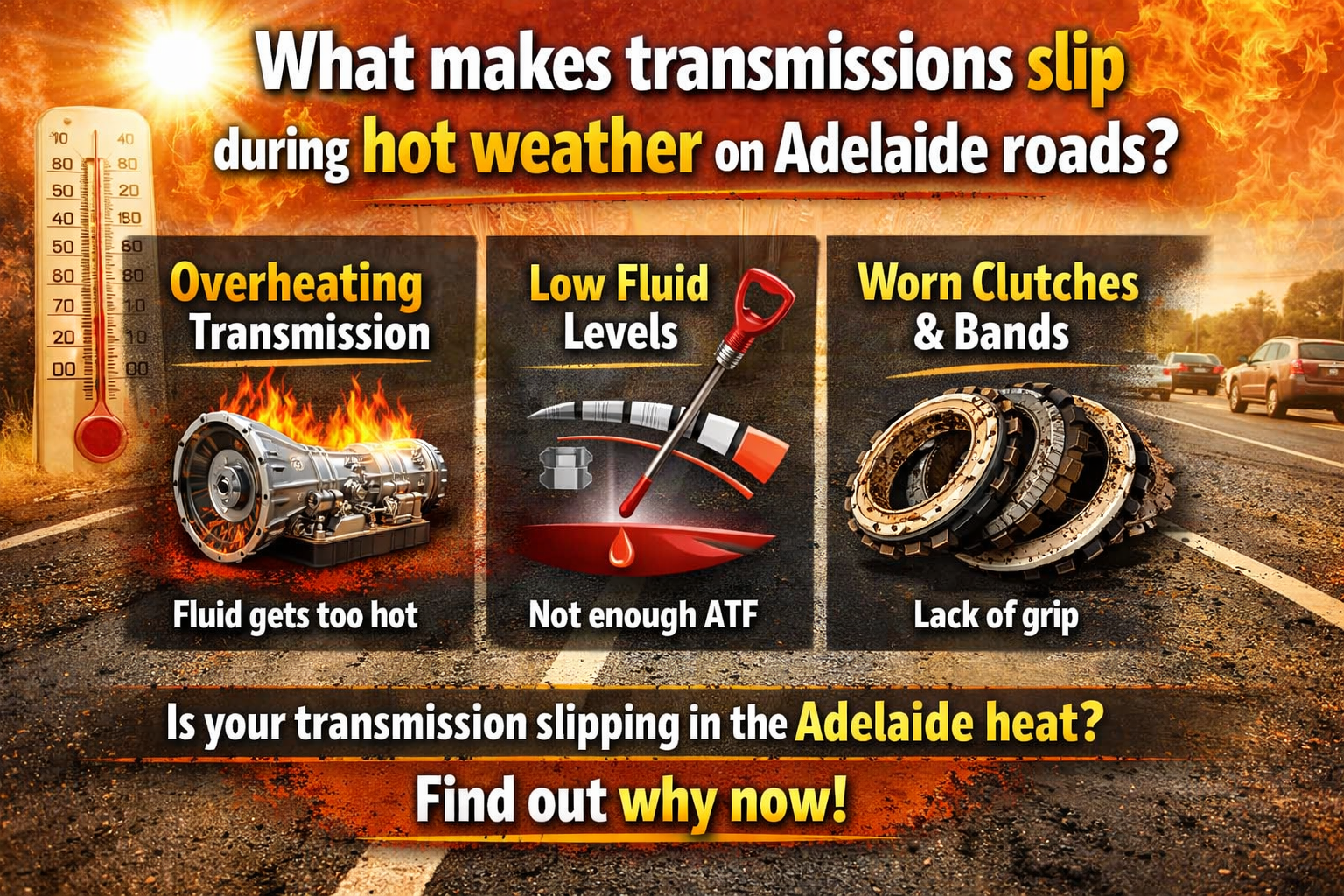
Adelaide summers are tough on vehicles. Long hot days. Radiating asphalt. Stop-start traffic. Add hills, towing, or a fully loaded work ute, and the transmission is under real stress.
One of the most common heat-related complaints is transmission slip. The engine revs, but road speed does not match. Gear changes feel delayed. Sometimes the transmission struggles to hold a gear.
In most cases, heat is the trigger. Heat changes fluid behaviour. Heat exposes wear. Heat pushes already stressed systems beyond their limits. Understanding why this happens helps prevent costly damage.
Why hot weather increases transmission slip risk
Automatic transmissions rely on hydraulic pressure and friction materials to operate correctly. Fluid must stay within a narrow temperature range to maintain pressure and clutch grip.
Hot weather reduces cooling efficiency and raises baseline temperatures. On Adelaide roads, this is amplified by:
- Heavy traffic and long idling
- Frequent acceleration
- Steep terrain
- Towing and load carrying
Once temperatures climb, several internal systems are affected at the same time. That is when slipping becomes noticeable.
1. Overheated transmission fluid loses effectiveness
Automatic transmission fluid does more than lubricate. It transfers hydraulic pressure, manages friction, and removes heat.
When ATF overheats, its viscosity drops and friction stability changes. Clutches no longer grip as firmly. Shifts begin to flare. Slip becomes more likely, especially under load.
Typical signs
- Slipping only after extended driving
- Delayed shifts in traffic
- Improvement after cooling down
Burnt-smelling or dark fluid is a clear warning sign. Heat-damaged fluid accelerates internal wear quickly.
2. Low fluid levels become critical in summer
A slightly low fluid level may go unnoticed in cooler conditions. In hot weather, it becomes a serious problem.
Low fluid allows air to enter the hydraulic system. This causes pressure fluctuations. Pressure loss means clutches cannot apply firmly, leading to slip.
Common causes include:
- Minor pan or seal leaks
- Cooler line seepage
- Internal cooler faults
Routine inspections matter. A small leak in winter can become a major issue during summer driving.
3. Transmission cooling systems struggle in high heat
Most vehicles rely on the radiator or a dedicated cooler to regulate transmission temperature. On very hot days, engine cooling systems are already working hard.
Blocked cooler fins, dirt buildup, or restricted airflow reduce cooling efficiency. Slow traffic worsens the issue by limiting airflow.
Vehicles used for towing or commercial work are especially vulnerable. In these cases, a thorough inspection-based service is critical. This is where a comprehensive approach such as auto transmission servicing, repairs & overhauls becomes valuable, because it assesses fluid condition, cooling performance, and internal wear together rather than in isolation.
4. Worn clutches slip more when hot
Internal clutch packs and bands wear over time. When wear reaches a borderline point, heat pushes them over the edge.
Cold, they may still hold. Hot, they start to slip.
A common clue is slipping in one specific gear or during one particular shift. That usually points to a targeted internal wear issue rather than a general fluid problem.
5. Valve body and solenoid issues surface under heat load
Modern automatic transmissions depend on solenoids and valves to control fluid pressure precisely. Heat can expose electrical weaknesses or sticking valves, especially when fluid is contaminated.
This leads to:
- Delayed clutch engagement
- Inconsistent shift timing
- Flare during upshifts
These faults often appear only after the vehicle has been driven for some time in hot conditions.
6. Torque converter heat in stop-start traffic
The torque converter generates significant heat at low speeds. In city traffic, it may remain unlocked for long periods, continuously producing heat.
If lock-up control is not operating correctly, temperatures climb fast. This can feel like slipping or hesitation during acceleration.
What to do if slipping occurs on a hot day
If slipping starts during hot conditions, quick action helps limit damage:
- Reduce load and throttle input
- Avoid towing or steep climbs
- Pull over and allow the transmission to cool
- Check for visible leaks once parked
- Avoid repeated testing under load
Continued slipping causes rapid clutch wear and fluid breakdown.
Hot-weather transmission prevention checklist
To reduce summer-related transmission issues, focus on these fundamentals:
- Service transmission fluid based on real-world use, not just minimum intervals
- Inspect and clean transmission coolers regularly
- Ensure the correct fluid specification is used
- Address early warning signs immediately
- Add auxiliary cooling for heavy-use vehicles if required
A structured diagnostic approach matters. Road testing, temperature monitoring, and fluid inspection should all be part of the process. This is why many operators rely on full Auto Transmission Servicing, Repairs & Overhauls rather than basic drain-and-fill services when symptoms appear.
Final takeaway for Adelaide driving conditions
Transmission slip during hot weather is rarely sudden or random. Heat exposes underlying issues such as fluid degradation, cooling limitations, pressure loss, or internal wear.
If slipping only appears on very warm days, consider it an early warning. Addressing the cause early often prevents major internal damage and expensive rebuilds later.
Done right, summer transmission issues are manageable. Ignored, they are costly.